

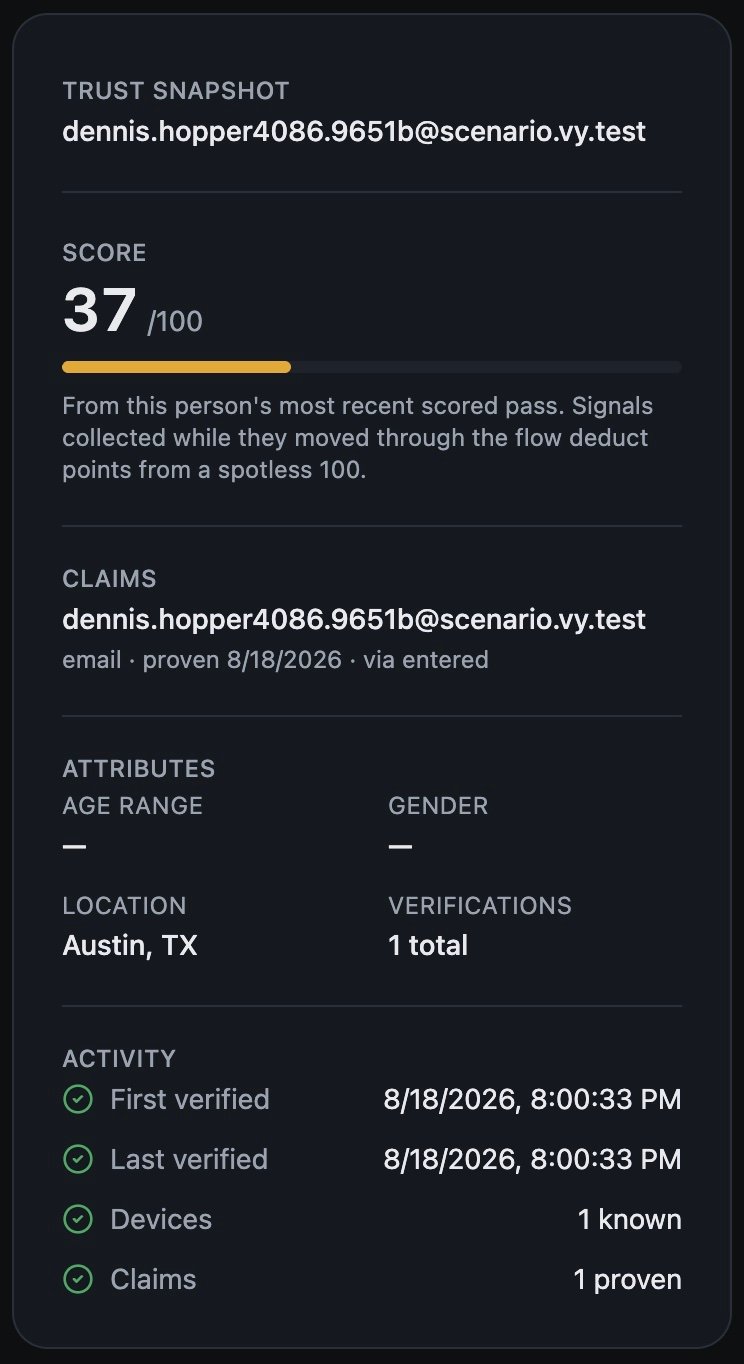
The panel beside every tab.
The score
A score out of 100 sits beside every tab. Everyone starts at 100, and anything suspicious we detect during the run subtracts from it, weighted by how suspicious it is. The score shown is from this person’s most recent scored pass, so it tells you about that run rather than standing as a permanent rating. Somebody who was clean last month and arrived through a datacenter IP this morning shows you this morning. Read it as a priority. A high score means we found little worth reporting. As it falls, there is more to look at, and by the time it is in the low tens there is usually a clear reason sitting one click away. What it never does is decide anything: your configuration settles the pass or fail.What we saw: the Signals tab
The score is the summary. Signals is the evidence, grouped into five categories with a count against each and a filter for high, medium or low strength.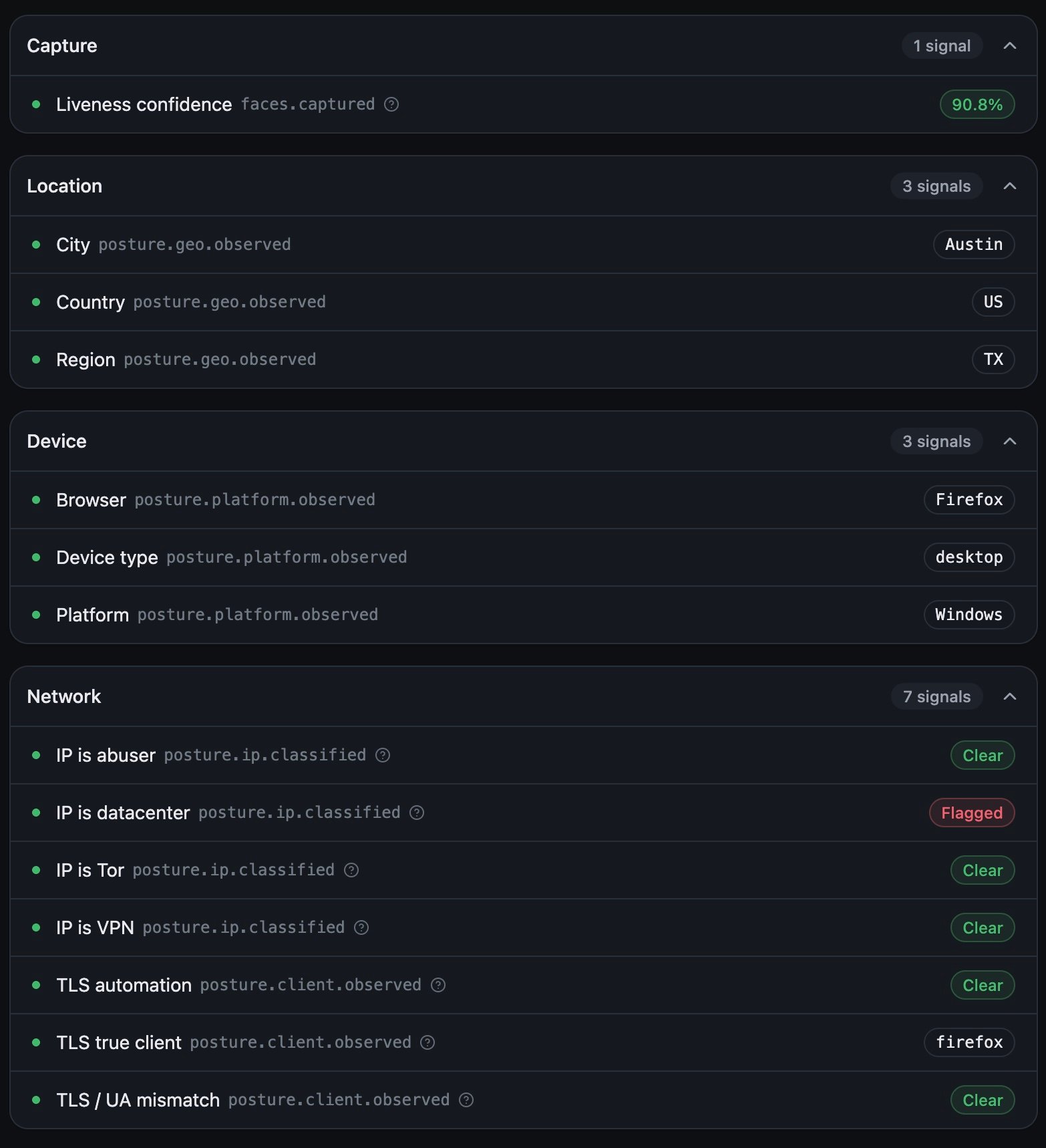
The Signals tab: five categories with counts, filterable by strength.
What we flagged: the Flags tab
Anything our checks raised on this person, with the reason attached. Empty means every run came through clean rather than nothing being looked at.Where they have been: the History tab
Every confirmation this person appears in, newest first, including runs where they are only the evidence. A denial shows its reason inline, solimit reached tells you your own limit fired.
This is the tab that gives you a baseline. One low-scoring run from a first-timer is thin. One low-scoring run from somebody with twelve clean ones behind them is a change, and changes are what you want to catch.